
Showing posts sorted by relevance for query Speakers Trust. Sort by date Show all posts

Friday, August 30, 2013

The Speaker's Trust


What if...

What if Zig Ziglar didn't really sell pots and pans door to door?
What if Les Brown wasn't really pigeon-holed as 'educable retarded'?
What if Tony Robbins never sat in his apartment listening to Neil Diamond sing 'I am I said'?

Three famous stories from three famous and trusted (mostly) high-level speakers. Stories that are theirs - they happened to them, and all add powerful credibility and emotion to their overall messages.

What if...they were lies? Would we still care about these speakers and their messages? Would we discredit them, and dismiss all they've ever said? Would we feel betrayed?

How much of a lie is a lie? Speakers often 'embellish' their stories. Dialogue is polished for maximum efficiency and effect. Times and places may change. Perhaps monetary amounts are fudged a bit. Where do we draw the line, as speakers, and as audiences? When does a 'little white lie' turn into a big fat honking lie that discredits the speaker, and ultimately breaks 'The Speaker's Trust'?

---

Last week at this time, Toastmasters was holding its annual 'World Championship of Public Speaking'. Speakers from around the world doing there best to reach the audience with touching stories that created laughter and tears. Most were likely first-person accounts of events in their lives - those are typically the most effective in this particular contest.

Nowhere in the rule book for this contest, however, does it mention the stories have to be TRUE. From reports I've heard over the years, there are a few that succeed in advancing, even winning the whole contest, with patently FALSE stories, told as if they were the truth.

2010 Champion David Henderson admitted just hours after the contest that his heart-wrenching first-person account of his childhood friend dying from Sickle Cell Anemia, a speech where he described specific conversations and interactions that had the audience entranced and emotionally invested, was, as he put it, 'Mythologized'. She never existed. The events never happened. You can find this interview by clicking HERE - it starts about halfway through, after the quiz game. (if I had listened to this 3 years ago - this post would have been written 3 years ago...)

He defends it as a way to bring attention to Sickle Cell Anemia. He succeeded at this, to be sure. He also won the entire contest, within the rules. For me, however, he also betrayed 'The Speaker's Trust'.

If you hear a first-person, told as truth story that puts you through an emotional ringer as this speech did, and then find out it's nothing more than a 'Tall Tale' created to make a point, how does that make you feel? Is there no other way to spread awareness? Are there no REAL stories that would work just as well?

Again - David did nothing 'wrong' within the parameters of the contest. It was a fantastic speech. In the context of the event, I thought he was the clear winner. But, what if he had revealed at the close of his speech that his friend never existed? Would the impact been as strong? Would the judges have ruled the same way?

---
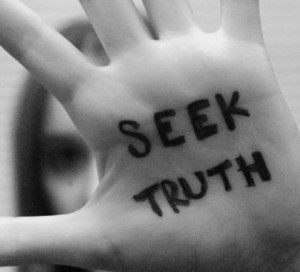

I am not naive enough to believe that every story out of a speaker's mouth is 100% truth. Speakers edit for maximum impact. Speakers tell stories that are metaphors to make a point. Speakers alter timelines, leave out details, and even overly glamorize results.

But when speakers outright manipulate an audience by telling stories as if they really happened to them, particularly emotional tales that will cause the audience to sympathize with the speaker when no sympathy is warranted, I believe it's betrayal. Why should I ever care about anything you say again?

What can we really do about 'The Speaker's Trust'? In the Toastmasters contest, maybe not much. Tough to verify the truth of that many speeches in such a short period of time. For professional speakers like Zig, Les, & Tony, the truth often comes out, and the audience has to decide. (I'm not, by the way, challenging these particular speakers).

'The Speaker's Trust' is a concept we have to honor within ourselves. To be faithful to our audiences, and be willing to draw the line at outright falsehoods. I don't care how good it sounds - if it isn't accurate, you're doing a disservice to your audience, and in the long run, to yourself.

Monday, May 18, 2026

What Speakers Can Learn From Caitlin Clark

 Speakers can learn from Caitlin Clark.

"Sometimes as a shooter, you can overthink when things aren't going your way. I knew I was going to break through at some point, and it was good to see them go in, but in my head, just telling myself to let it fly. Don't hold onto it, don't aim it, just shoot it." ~ Caitlin Clark, WNBA's Indiana Fever

One of the biggest mistakes speakers make is abandoning the fundamentals the moment things feel off.

A joke misses. The audience looks distracted. You lose your place.
It's understandable - your confidence takes a hit.

Do you stop speaking naturally? Aiming every sentence, overthinking every transition, trying to sound perfect instead of sounding real and land that perfect laugh, the perfect thoughtful silence, or that mid-speech applause?

The best speakers trust their reps.
They trust their preparation.
They trust their stories, their message, and return to the fundamentals.

They return to:
• Eye contact
• Clear ideas
• Intentional pauses
• Strong stories
• Genuine connection

That’s what makes your audience lean in, restoring your confidence in the process.

You're going to have rough moments on stage. The key is not panicking when they happen. Keep speaking anyway. Eventually, you break through. Not because you forced it, but because you trusted what you already know how to do.

You've got to hashtagSpeakAnyway on stage to hashtagWinAnyway as a speaker!
Need some help? Email me at rich@richhopkins.com!

Tuesday, November 11, 2025

The Best Time in Your Speech for Your Signature Story Is....


I’ve heard a lot of arguments about this one over the years – and different speakers have different opinions. In any speech, your personal experiences are crucial, but particularly in inspirational keynote presentations. Often referred to as your ‘signature story’, it’s the story you’re most known for, the story that slams home your point. Your ‘overcame abuse’, ‘survived the accident’, ‘ran a marathon on one leg’ story which resonates in your audiences memory long after they leave.

Some speakers open with it. Others embed it later on. Some delay it to the very end. All can be effective, but it depends both on your audience, and what you've been called to deliver.

Open With It

This is my LEAST favorite option, but I hear it a lot.

PROS: Gets it out to your audience quickly, and lets you build the rest of your presentation off an emotional high.

CONS: If they don't know, like and trust you, there's no guarantee they're going to give a whit about your big story, and you'll lose them entirely.

WHO IT WORKS FOR: Celebrity speakers - folks the audience already have a connection to through fame or industry. All others beware. (Tip: If your audience has paid to hear you speak, to them, you're a celebrity.)

Before Your Process

You've set the table - connected with the audience, defined the problem, and promised a solution. Now you let it all loose with your signature story. Afterward, you make your points one by one, calling back to various parts of your great adventure to support each point as you failed/learned/succeeded through it all.

PROS: You have full control of the narrative and how it will be interpreted. You come off looking like an expert, one who has gone in one end and come out the other better for it. You are the leader they need!

CONS: You may not ever return, which means they need to lead themselves. If they only have your story and experience to relate too, it may not be enough.

WHO IT WORKS FOR: Preachers, Politicians, Business Leaders - those who are building a following, a tribe. If you're going to stick around, you can inspire the troops to follow you to hell and back with your signature story. (Tip: Even in this scenario, the more you can get your audience seeing themselves succeeding by imitation, the better off you'll be. Most followers see themselves as leaders in their own right.)

After Your Process

This is my personal preference.

Hook 'em, empathize with them, promise them a solution, paint the sunny future they'll have when they apply your process, which you offer with a combination of short personal anecdotes and third party examples, and then LOWER THE BOOM.

PROS: By now they trust you. They've laughed with you. They understand what you're saying is more about them than about you. They don't see you as the inimitable hero of the presentation - instead they know they have tools to move forward with in their own life.

CONS: If your presentation is too long, and your process too complicated, by the time you get to you amazing keynote story, your audience may not really want it. You'll probably have to edit it down, and occasionally, depending on time, delete it entirely.

WHO IT WORKS FOR: Pretty much everybody. For the average speaker, your information will have more leverage than your inspiration - your inspiration is the frosting on top. If the celebrities, preachers, and politicians would try it, they might find it more effective than what they're doing now. (Tip: have small, medium and large versions of your story - if time does become an issue, you'll be ready.)

Article content

Takeaway

But Rich, my story is why I want to speak in the first place! To share my trials and tribulations! Yeah, I know. But why do you want to share them? For recognition? For sympathy? If it's for any other reason than helping others through their own version of the difficulties you've made it through, you're more likely to an entertainer than a speaker. There's nothing wrong with that, and the sooner you realize it the better.

You signature story should be the final proof of all you've talked about in the presentation. The story that lets your audience know you DO understand them, you HAVE been there, and you're ready to help THEM get to the other side. Yes, your big story is all about you - but in the end, your audience should feel like it is really all about them.

From there, it's THEIR story that matters.

Tuesday, January 22, 2013

Make Your Speech the Soundtrack of Their Lives

John Williams

The Sound of Music
Jaws
Star Wars
Superman the Movie
Jurassic Park
Harry Potter

Could you hear the music from any or all of those movies in your mind after reading the title? Can you now? Sorry if I've put Rodgers & Hammerstein or John Williams in your head for the rest of the day. Even as I write this, I'm listening to my 'Movie Soundtrack' station on Pandora.

Music has way of embedding itself in our memories, and connecting to our life experiences. The song that played when you met your spouse, that you may have again played at your wedding. The music you use while you work out, while you study, while you write. I even used music to memorize the Periodic Table.

Music stays with us because it repeats, because it often has a simple beat or lyric refrain, and because it connects with us emotionally.

What if your speech could do the same thing? If you could embed your stories and points in your audiences brain so that it became part of the Soundtrack of their Lives?

I'm not talking specifically about music, though some top speakers intro and outro their speaking engagement with theme music.

No, YOUR speech soundtrack is your speech anchor, or series of anchors. Phrases that embody your points and your speech purpose in just a few words. Phrases that resound in your audiences heads as they leave. Phrases that, when said in a setting years later, brings back echoes of the speaker, and the ideas they passionately shared from the stage.

They are often referred to as 'Foundational Phrases', or more popularly, 'the Phrase that Pays'.

For my Toastmaster readers, the 5-7 minute format of most speeches lends itself to a single phrase, supported by 1-3 stories or examples. Ryan Avery used this method to maximum effect in his 2012 World Championship Speech, "Trust is a Must"

.

In a longer speech, it's possible to use more than one phrase - as long as they all build to the overall speech tone. Movies will often shift styles of music and create variations on a theme, while still pushing the story to one ultimate conclusion. Your phrases must do the same thing. If you have a memorable phrase for each 5-7 minute segment of your 45 minute keynote, you create a framework under your ultimate theme.

The phrases can be as few as two or three words, or as long as 8-10. They should indicate action, invoke emotion, and/or reflect results. Often, the most memorable phrases become short-hand for longer phrases, and ultimately branding for the speakers themselves.

See You at the Top! - Zig Ziglar
Eat That Frog! - Brian Tracy
It's Possible! - Les Brown

All memorable phrases - all both stand on their own, and as a piece of a larger speech or program. I'm sure you can think of a dozen more from your favorite speakers.

Whether you're putting on a keynote filled with inspirational stories, a workshop with more practical exercises and applications of your concepts, or just speaking for a few minutes to promote a singular point, finding your Soundtrack, your Phrase (or Phrases), will help you be a better speaker, and give your audience longer-lasting results. All of which will, as the saying states - help you get paid.

Like a great, pulse-pounding soundtrack, your speech needs to build emotion, and you must anchor your ideas in the minds and hearts of your audience with repetition, rhythm, and resonance to ensure they remember what you've said long after they leave your presentation. You want them using your phrases in their daily life, advising their peers and employees with the wisdom you've shared.

The ultimate moment, when you know you've successfully managed to Speak & Deliver, is when the Soundtrack of your speech becomes part of the Soundtrack of their lives.

What are your favorite phrases that have stayed with you from speakers over the years?

Tuesday, January 18, 2011

Pick up the Pace!


When was the last time you factored in the Pace of your speaking voice?

It's not something speakers often think about, unless we are in a timed speaking situation, or desperate to sit down and shut up. It's easier to just speak the way we speak, and trust that the audience is taking in the brilliance of our content.

Not thinking about it can be a disastrous mistake. Pacing is crucial to keeping your audience engaged, and getting your point across.

Not to be confused with Vocal Variety or Tone of Voice, Pacing is the speed at which you speak. In a typical conversation, we speak at 100-125 words per minute. Giving a speech, say in Toastmasters or in a work presentation, that speeds up to 125-150 words, with gusts up to 175. Adrenaline, the knowledge of what we're going to say ahead of time, and the idea that we either don't want to be, or won't be, all contribute to our faster speech patterns. Speakers who succumb to nerves will often speak at an even faster rate, leaving themselves, and their audiences, breathless.

According to various studies, our average listening speed is between 400 and 700 words per minute. My own opinion leans to the 400 number - since I can't understand much of what the 'World's Fastest Talker' is saying below - in fact, even 400 seems too fast!


Even that statistic is limited. There is a difference between words heard and ideas understood. A speech isn't just about words. It involves ideas, emotions, concepts, mental pictures, problems and solutions, and usually, a call to action.Your speaking Pace must take all of these components into consideration for you to connect and communicate with your audience.

People need time to take in the concepts and consider them for themselves, internalize them, before catching back up to you and your words. Give them the time by slowing down enough to allow them to think. We're not talking minutes here - but seconds. Either slow down your speech and add a short pause, or speed up your speech to add urgency and heightened excitement - then follow with a longer pause. Both will give your audience their necessary "hmmmmm..." moment.

Tips to start using Pace as an effective tool as a speaker:

1. Record your next speech, and get it transcribed. Transcribers are plentiful at about $50/hr on the web, and often, you can even find a teenager to do it for half the price (pick wisely, so you don't end up with half the transcript!). Figure your words per minute from the transcription so you have your baseline speed to consider as you plan your pacing.

2. Once you have the script, listen to the recording, then mark where your pace speeds up and slows down. Do the pace changes make sense? Do they add to the effectiveness of your speech? Are you even aware that your speed is changing - that is, are you intentional in your change of pace?

3. Listen to other speakers that are similar to you in topic and target audience. You Tube offers a wealth of examples. Compare your rate to theirs. Many of the most successful professional speakers speak at a much faster pace than you would expect.

4. Break your speech transcript into five parts - Conversational, Storytelling, Big Ideas, Transitions, and Calls to Action. Some of these may intermingle, such as the climax of your Story being a Big Idea. This can be a helpful exercise in general, even beyond planning your pacing.

With your speech transcript broken down, listen again to hear what your pace is during each segment. If your pace is the same throughout your speech, your audience isn't going to be as engaged as they could be. If your pace is at its slowest during the conversational and storytelling parts of your speech, your audience will likely start to wander.

By speeding up your pace during the conversational parts of your speech, you keep the audience's attention without losing comprehension, unless you really start speeding along. When people don't have to work hard to understand you, you are able to speed up without penalty.

Speeding up during your storytelling will add excitement and intensity, and again keep your audience interested. Speaking at higher speeds allows you to 'set up' your audience for your slower moments - when you get to the big idea you want them to ponder, when you paint a somber or painful emotion, and when you give your call to action.

There are times when its appropriate to speed up when painting emotions or expressing your call to action. It depends on what emotions you are hoping to evoke, who your audience is, and the occasion. The more excitement you want to evoke in a moment, the more speaking at a faster pace, can help the audience feel the emotion with the vigor you intend.

Pacing is going to be different for each speaker, and each of you needs to determine what is going to work for you. The only hard and fast rules I can offer is this: If you don't vary your pacing, and vary it in the right spots for your message and your audience, you aren't being as effective as you should be. You aren't there to read a news report with calm objectivity, and your audience isn't there to hear their High School Science Professor.

The key point to take away from this post? Be aware of your pace. Proactively examine what you are doing now, and determine how your pace can improve your ability to Speak & Deliver.Your audience will thank you!

LinkWithin

Related Posts Plugin for WordPress, Blogger...